
People who have delicate skin are inquisitive to learn about the ingredients list a bit closely.
Some soaps pull moisture right out of your skin. Yet a pleasant scent doesn’t guarantee comfort – some leave behind tightness instead. What suits another person might irritate yours without warning. Slowly, curiosity grows about ingredients hidden inside daily routines.
That same question is what started Spice Wood Soaps.
Out of uniform and living in Saint Augustine, Florida, the maker started noticing what people were putting on their skin. Could those common items really be that rough without reason? Wondering about it led to trying out goat milk soap right at home – just for themselves at first, later shared with relatives, after that passed along to neighbors. A tiny kitchen project slowly shaped itself into a line of handcrafted soaps using soft, familiar components.
Some folks find regular cleansers too harsh. Goat milk soap steps in quietly, gentle on delicate skin. Creamy texture coats without fuss. Simple feel meets quiet relief. Many realize later – this soft touch was the piece their mornings lacked.
Get Soft Skin Fast with Goat Milk Soap Bars
At times, delicate skin stays quiet before responding.
It begins with a lack of moisture, maybe. Right after stepping out of the shower, there is that slight pull across the skin. One spot on the arm flares up again, even when nothing seems different. Washing leaves fingers feeling uneven, almost grainy. Products with bold scents? They tend to make things worse instead of better.
Most folks overlook how much soap really matters here.
Most days you reach for soap more than once. Harsh kinds? They leave skin tight, maybe even irritated. Swap in something milder – suddenly things feel smoother. When everything else on your shelf stays basic, that small switch stands out.
Lathered up, goat milk soap tends to feel rich and smooth on the skin. Cleansing happens gently – none of that tight, dry aftermath common with standard bars. Thoughtfully crafted, even daily washing shifts toward comfort, becoming kinder to touch.
Not all goat milk bars suit everyone, true. Somehow, these could ease things when stronger stuff has left skin too raw.
Discover Why Skin Loves Goat Milk Soap for a softer, calmer, and naturally refreshed feel every day.
Mostly people shift to natural soaps after having their worst experience with regular products. While irritation piles up, some find relief shows up quietly in a different kind of bar.
Lots of folks deal with skin that cracks easily, itches a lot, reacts fast. Harsh soaps often make things worse – strong scents, rough formulas upset delicate areas. Creamy textures draw attention, especially when they come from goat milk. Mildness stands out here, feels different than usual washes.
Truth sits quiet here – soap won’t heal eczema. Yet honesty matters most.
Most times, regular washing needs just gentle care. When eczema turns serious – raw patches, oozing sores, constant irritation – a skin doctor must step in. Some find store-bought soaps sting too much. Goat milk versions? They tend to sit easier on sensitive areas. Not every bar works the same, yet this kind often brings fewer rough reactions.
Start with something basic when testing it out. A mild scent works better at first. Stay away from gritty scrubs. Pay attention to what your skin shows. How it reacts is your guide.
Gentle matters most.
Shop Pure Soap Goat Milk for Daily Fresh Skin
Lather rises smooth when goat milk meets sturdy plant oils. Richness comes through each wash thanks to fatty makeup found right in the milk itself.
Back comes everyone, drawn by how smooth it feels. That soft touch sticks in memory long after washing.
Right after you wash, certain soaps make your skin pull tight. Instead of stripping everything away, a thoughtful goat milk soap keeps things even. Cleans without roughness. Balance matters when water runs off.
For those whose skin reacts quickly, little changes add up. Since irritation shows fast, even mild shifts stand out. Not just soap but how it foams makes a difference. Smooth washing, careful rinsing – these details reshape daily habits. Thought put into each bar turns ordinary moments easier.
Smooth but somehow more attractive than expected . Not like the stuff found in most stores. This one made with goat’s milk sits heavier in your hand. Lathers less obvious. Feels honest after a few uses. Soap changes slightly each time you pick it up.
Some soaps leave a stinging tingle behind. Others pull moisture until skin cracks. The scent might cling too long, like unwanted cologne. Harsh notes show up where comfort should be. A simple wash becomes rough instead of soft.
Some bars are made more for strong cleansing and long shelf life than skin comfort. Handmade goat milk soap often takes a different approach.
It focuses on feel.
A good handmade bar should lather nicely, rinse clean, and leave skin feeling comfortable. It should not feel like it is fighting your skin. It should feel like something made to work with it.
See Why Goat Milk Soap Is Great for Your Skin today with gentle cleansing and natural moisture your skin will love.
That is where small-batch soap shines. The maker can think about texture, scent, ingredients, and the final experience. The bar is not just a product. It is a craft.
Curiosity strikes some folks when they wonder about turning goat’s milk into soap. What steps actually go into that process? It starts to click once you see each part unfold slowly.
One thinks how bubble are formed when fats badly reacts which we call as saponification. Instead of water, some makers pour in goat milk to fuel the mix. Creamy textures emerge thanks to that dairy swap – yet spills happen easier when cold temps slip. Handling needs patience. Surprises lurk if steps rush.
Most folks find that goat milk burns easily because of its sugar and protein. To prevent messes, they sometimes cool the liquid first – maybe even ice it down solid. Each ingredient lands on the scale exactly where it should. Stirring happens slow, never rushed. The blend slips into molds when ready. Weeks pass while bars sit still, doing their thing.
Harder it gets the longer it sits. Mildness comes through waiting, not rushing. Lasts better when given time to settle.
Though using goat milk soap seems straightforward, crafting it right demands time along with practice.
People often look up goat milk soap recipes since crafting your own bars feels intriguing.
Somehow, mixing milk, oils, a precise blend brings quiet joy – shaping them into a smooth bar feels complete. Yet those just starting must realize: creating soap from nothing demands more than casual stirring at the stove.
Lye demands careful handling. Exact measurements keep things on track. Temperature plays a role more than most expect. A dish comes together if each piece lands where it should. When protection is worn, outcomes shift quietly.
At first, beginners often put on gloves, then protect their eyes too. Breathe freely because it is as crucial as measuring substances exactly by weight. Following a trustworthy method helps since each move has importance. Once things feel familiar, straying from the plan could work – but patience comes first. Some folks find soap making delightful. Yet it sometimes feels overwhelming, too. This gap leaves room for curiosity without the pressure to try – so they explore the craft by purchasing handmade bars instead, often turning to trusted sources such as Spice Wood Soaps.
You get the beauty of handmade soap without the mess, math, or safety concerns.
There are many goat milk soap recipes online.
Some are simple. Some are advanced. From time to time, people reach for olive oil – yet others pick coconut instead. Moving on, castor oil slips in when a thicker lather matters. Sheaf butter shows up to soften things quietly. Honey arrives for gentle moisture, while oatmeal steps in to soothe skin. Clays bring texture plus subtle color shifts. Essential oils appear only where scent plays a role. Every piece alters how the bar feels, looks, acts. Nothing stays quite the same once mixed.
Soap needs more than nice smells mixed in. What matters most? How firm it stays, how good of a foam it makes, does it clean without drying , and how long the soap bar lasts. Getting those parts right means the mix actually functions. Not every blend does.
Out of knowing comes clarity. What counts shows up when it’s been seen before.
A batch gets tested first thing by the soap maker. Oils shift next when needed, depending on how things go. Cure time changes often, sometimes longer, sometimes shorter. Scent mixes evolve slowly, drop by drop. Texture tweaks come last, almost quietly. Customers see only the smooth result eventually. Behind it all though – effort piles up unseen.
From trial and error came Spice Wood Soaps – its roots tangled in doing, not planning. The appeal lives in those early messes, each batch teaching something new.
Save More with Bulk Goat Milk Soap Today
Simple it seems, the idea of 3 ingredient goat milk soap.
Most folks find it attractive when things stay simple. The thought of soap built from just a handful of known items pulls people in. When product tags overflow with names nobody knows, seeing only a few on the list hits differently. It lands like a breath that was held too long finally let go.
Yet things aren’t quite that simple.
Fats mix with lye when making real soap from nothing. Liquid joins early, shaping the blend. Oils matter just as much as the rest.
Goat milk can be used as the liquid, but the oil portion may include more than one oil to create the right texture and lather. So while a “three ingredient” idea can be a helpful starting concept, good soap often needs a carefully balanced formula.
A person working with a store-bought soap block might just add fragrance along with dye. Fun? Sure. Still, it doesn’t match creating bars completely by hand.
Good things come in simple packages. Yet safety paired with smart design beats basic simplicity every time.
A good starting point might be goats milk melt and pour soap – simple for newcomers. This kind of base skips complicated steps, letting first-timers jump right in. Often chosen for its gentle mix, it softens during heating without fuss. Some find the process smooth, almost like working with softened wax. New crafters sometimes prefer it because cleanup feels less overwhelming. With little prep needed, ideas can move fast from thought to bar.
Most of the work here happens before you even start – the mixture has turned to soap already. Slice it up, warm until liquid, then stir in dyes or scents when inspired. Shape comes next, guided by whatever mold feels right at the moment. Cooling sets the form without any rush. Handling harsh chemicals? Not necessary anymore, so newcomers find their footing faster.
For presents, handmade items, or fun experiments, melt-and-pour works well. Trying out different looks, smells, and forms becomes possible without studying how soap reacts on a deeper level.
Yet this isn’t like soap made by hand through the cold method.
Starting fresh with soap means picking each part yourself – what oils go in, whether there is goat milk, what extra bits get added. Instead of building from nothing, melt-and-pour begins after the base already exists. The way it dries matters when making your own; that choice vanishes if using a premade block. Texture at the finish depends on early decisions you make – or skip.
Every tool helps, just differently. Some fit one task, others another. Each has its moment when it works best.
But if you want a deeply crafted bar, small-batch handmade soap has a special character.
Home soap making feels satisfying – yet demands patience, a few basic tools, attention to safety, plus plenty of time. Though straightforward, each step needs care, especially when handling raw ingredients.
Most people skip straight to using handmade soap because someone else already faced the tricky steps. Lye stays out of your hands when you buy ready-made bars. Waiting around for weeks? Not necessary if you purchase instead of making it. Problems like melted shapes or mushy textures belong to the maker, not you.
A crafted bar arrives ready, shaped by hands that spent the time. Finished without effort on your part, it comes from labor long completed.
What Spice Wood Soaps brings is simple – care shaped by hand, softness built into every ingredient, yet tough enough for daily routines. Each bar lives where comfort meets routine.
For a delicate skin, pick your product wisely
Most times, a soap should sit soft on the skin instead of shouting through scent. When irritation shows up fast, skip gritty scrubbers altogether. Try just one type at first – patience helps more than switching quick. Ending too soon might miss what actually works.
Smooth on the skin, a proper goat milk soap stays gentle through rinse and after. Without drying out, it keeps irritation at bay – no tightness, no itch. Washed but never robbed of what matters.
Maybe stick to your usual routine when testing that new soap. Switching five things together? Then good luck figuring out what your skin actually responds to.
A small shift in thinking opens clearer views.
A piece of soap made with goat’s milk should sit out to air after each time it gets wet.
Water pooling underneath softens it fast. Try a tray with gaps or you can use a holder that can drain, and shed moisture.
Keep it away when you are not using it specifically in shower steam to make it last longer.
This helps the bar stay firm and last longer.
Most handmade soaps feel thick and smooth. To keep them that way, where you leave them counts. Air moving around helps more than most think.
Each day, grab the bar – yet leave space for air after you’re done. It needs moments without touch to stay right.
Spice Wood Soaps started with a real question and a real need.
The founder wanted a soap that felt clean, gentle, and understandable. What began as a personal project in Saint Augustine grew because people tried the bars and wanted more.
That kind of beginning gives the brand a human feel.
It was not created just to follow a skin care trend. It was created because someone cared enough to ask what they were putting on their skin and then learned how to make something better.
That care is what handmade soap is all about.
It deserves products that feel thoughtful instead of harsh. It derives soup that can clean you skin without making it feel uncomfortable. For many people today goat milk soap has been the skin miracle soap. Whether you want it for eczema or any other skin problem the most safest option is goat milk soap.
Spice Wood Soaps keeps it very simple : our handmade soaps are for a something very gentle upon your skin.
Sometimes the best skin care change is not complicated. Sometimes it starts with a better bar of soap.
About Spicewood Soap
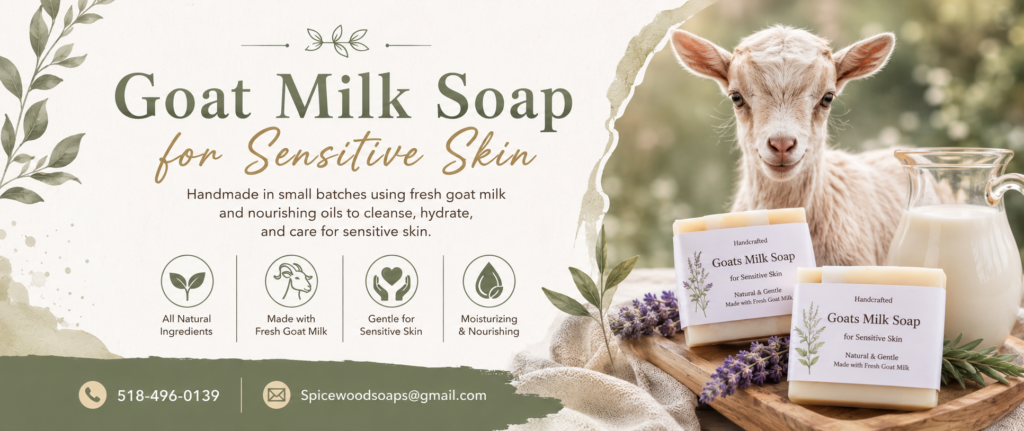
At Spicewood Soap, we believe skincare should feel simple, natural, and comforting. We create Handcrafted Goat Milk Soap USA customers can trust for everyday gentle cleansing and nourishment. Our carefully made soaps are crafted with quality ingredients to support healthy-looking skin while offering a softer, more refreshing skincare experience.
If you are searching for Natural Goat Milk Soap for Sensitive Skin, our collection is designed to bring a gentle touch to your daily routine without harsh additives or unnecessary chemicals. Each bar is thoughtfully handcrafted to provide a rich, creamy lather your skin will love.
📞 Phone: 518-496-0139
📧 Email: Spicewoodsoaps@gmail.com
Explore more handcrafted soaps and discover products made with care for everyday skincare needs.